Many people grow up hearing Carnatic music at weddings, in temples or on a grandparent’s radio, yet never quite know what is going on. A concert can seem long, the improvisation can feel formless and the vocabulary is intimidating. You do not need to be trained to enjoy it. With a few basic ideas, a Carnatic concert stops being background sound and becomes something you can actively follow.
The two building blocks: raga and tala
Raga: the melodic framework
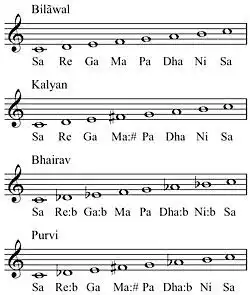
A raga is more than a scale. It is a set of notes plus rules and habits about how to move between them: which notes are emphasised, which are approached with ornamentation, and characteristic phrases that make the raga instantly recognisable to experienced listeners. Two ragas can share the same notes and still sound completely different because of how those notes are used.
The ornamentation, called gamaka, is central to Carnatic music. Notes are rarely sung flat and straight; they oscillate, glide and bend. This is often what newcomers notice first, and learning to enjoy gamakas is a big step towards enjoying the whole tradition.
Tala: the rhythmic cycle
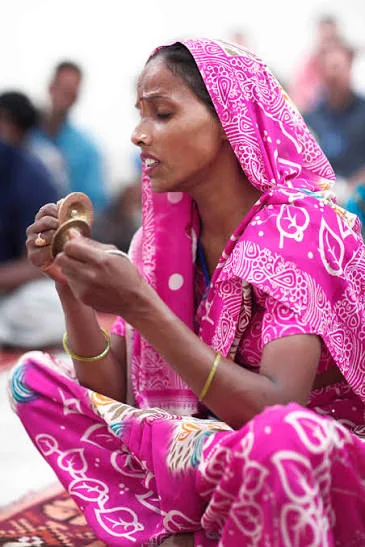
A tala is a repeating rhythmic cycle. The most common is Adi tala, a cycle of eight beats. You will often see people in the audience keeping time with their hands: a clap, finger counts and a wave. Following along with them is one of the easiest ways to start feeling the structure of a piece.
The kriti: the heart of a concert
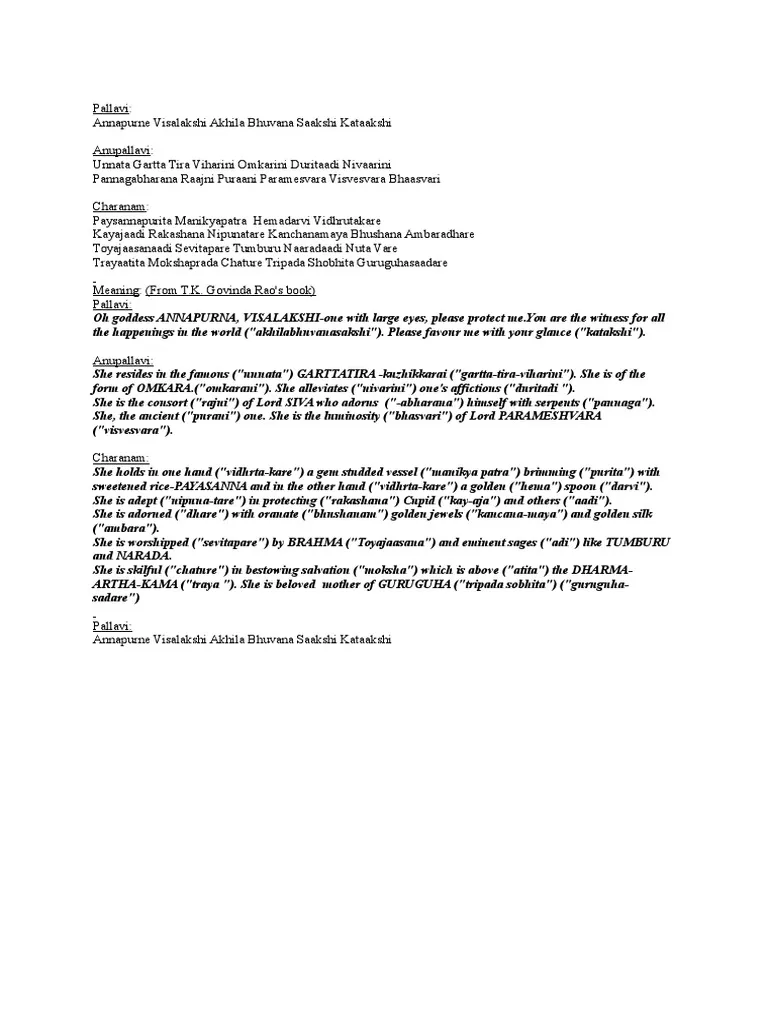
Most of a Carnatic concert is built around compositions called kritis. A typical kriti has three parts:
- Pallavi: the opening section and refrain, which returns throughout the piece
- Anupallavi: a second section that usually explores a higher range
- Charanam: a longer final section, after which the performer usually returns to the pallavi
Many of the most beloved kritis were composed by the “Trinity” of Carnatic music, three composers of the 18th and 19th centuries: Tyagaraja, Muthuswami Dikshitar and Syama Sastri. Tyagaraja wrote mostly in Telugu, Dikshitar mostly in Sanskrit, and Syama Sastri in both. Their works remain at the core of the concert repertoire.
Improvisation: where the magic happens
What makes each concert unique is the improvisation built around the compositions:
Alapana: a slow, unmetered exploration of the raga before the composition begins. There is no fixed rhythm here; the musician gradually unfolds the raga’s character. A long alapana tells you the performer considers this the main piece of the evening.
Neraval: the musician takes a single line of the lyrics and improvises many melodic variations on it while keeping to the tala.
Kalpanaswaram: improvised passages sung in sol-fa syllables (sa, ri, ga, ma, pa, da, ni) that always land back on a set point in the composition. Watch for the satisfying moment when a long, complex passage lands exactly on the beat.
Tani avartanam: the percussion solo, usually led by the mridangam and joined by instruments such as the ghatam or kanjira. It often follows the main piece and showcases intricate rhythmic patterns.
Who is on stage
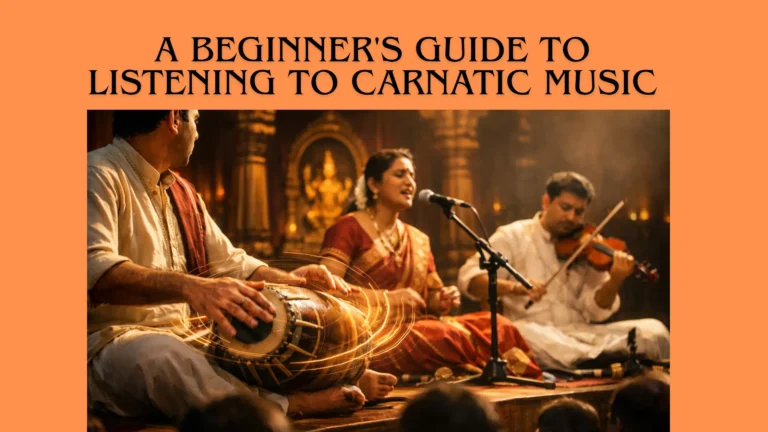
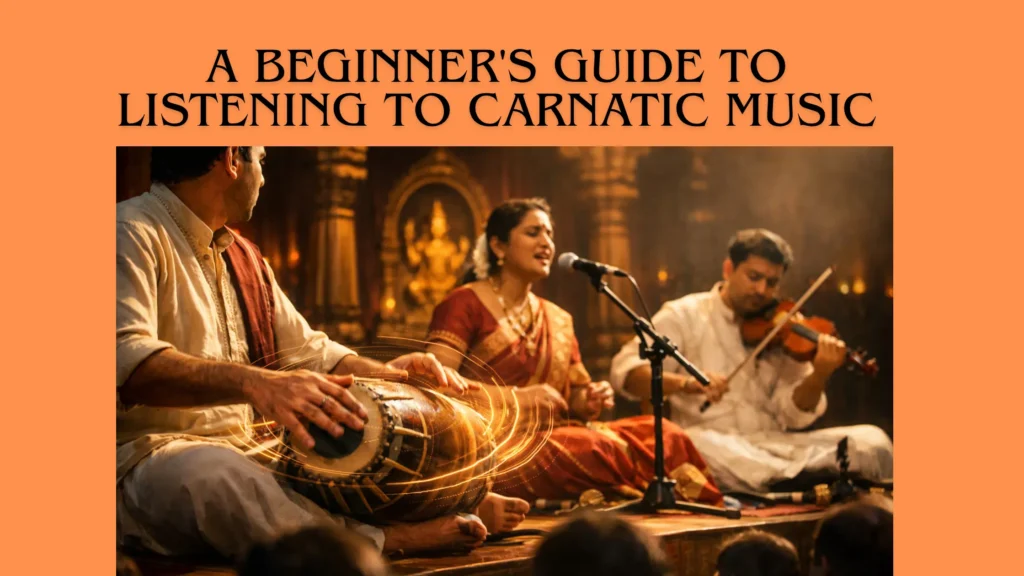
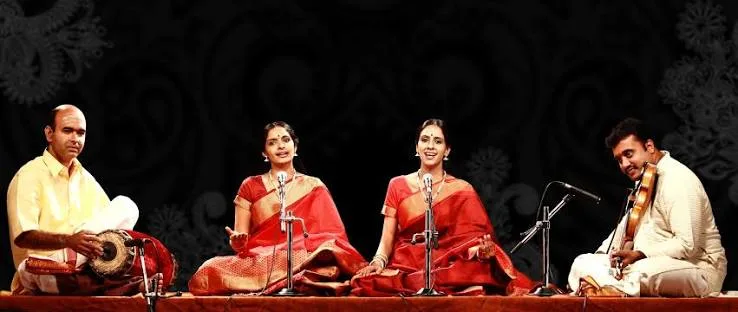
A typical concert features a lead vocalist or instrumentalist, a violinist who echoes and responds to the lead, a mridangam player providing rhythm, and often a tambura or electronic drone holding the base pitch. Sometimes additional percussion joins in. The interplay between the musicians, especially the violinist’s responses during the alapana and swaram passages, is part of the pleasure.
How a concert is usually structured
Concerts often begin with a varnam, a composition that serves as a warm-up and showcases the raga’s essential phrases. A series of kritis follows, of varying length and mood. The centrepiece is usually a major composition with an extended alapana, neraval, kalpanaswaram and a tani avartanam. The final part of the concert often features lighter pieces: devotional songs, tillanas with lively rhythms and pieces associated with dance.
A listening plan for beginners
- Week 1: get familiar with a few ragas. Pick three popular ragas, such as Mohanam, Kalyani and Hamsadhwani, and listen to several different artists performing pieces in each. Notice what sounds the same across performances.
- Week 2: follow the tala. Choose pieces in Adi tala and try to keep the eight-beat cycle with your hand.
- Week 3: listen for structure. Identify the pallavi, anupallavi and charanam in a few kritis, and notice when the singer returns to the pallavi.
- Week 4: try a full concert. Listen to a complete recording, or better, attend a live performance. Sabhas and cultural organisations in many Indian cities host regular concerts, and the December music season in Chennai is the largest celebration of the tradition.
Concert etiquette
Audiences often applaud at the end of an impressive improvised passage, not only at the end of a piece. Keep phones silent, avoid walking in and out during the main piece, and do not worry if you clap at a slightly wrong moment. Carnatic audiences are generally welcoming to newcomers.
The bottom line
You do not need to identify ragas by name or count complex talas to enjoy Carnatic music. Start by noticing the shape of the melody, the return of the pallavi, and the thrill of an improvised passage landing perfectly on the beat. The more you listen, the more you will hear.