
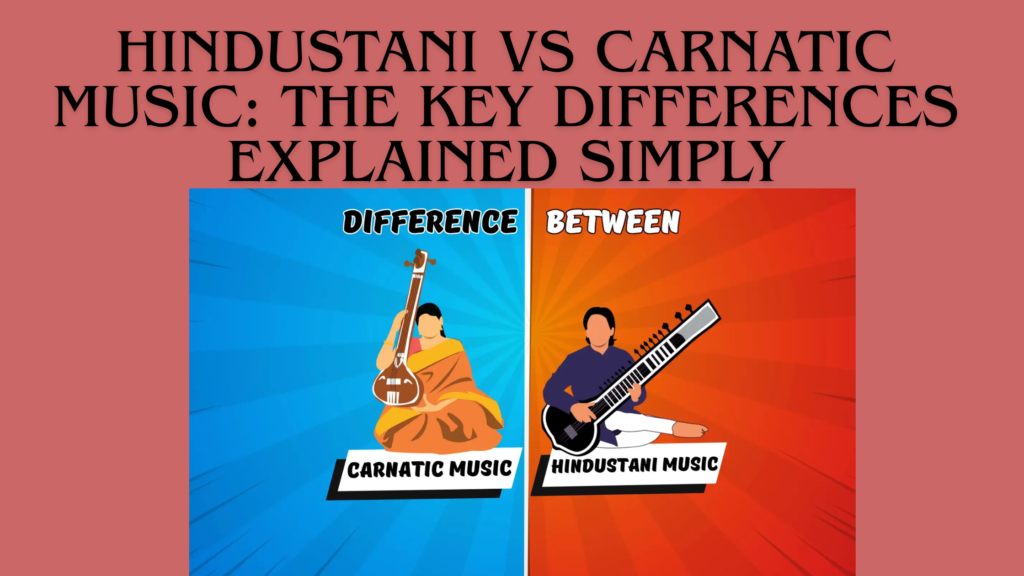
Indian classical music has two major traditions: Hindustani music, rooted mainly in North India, and Carnatic music, rooted mainly in South India. They share deep foundations, including the concepts of raga and tala, yet a concert in each can feel strikingly different. If you have enjoyed one, understanding the other opens up a whole new world of listening.
Shared roots, different paths
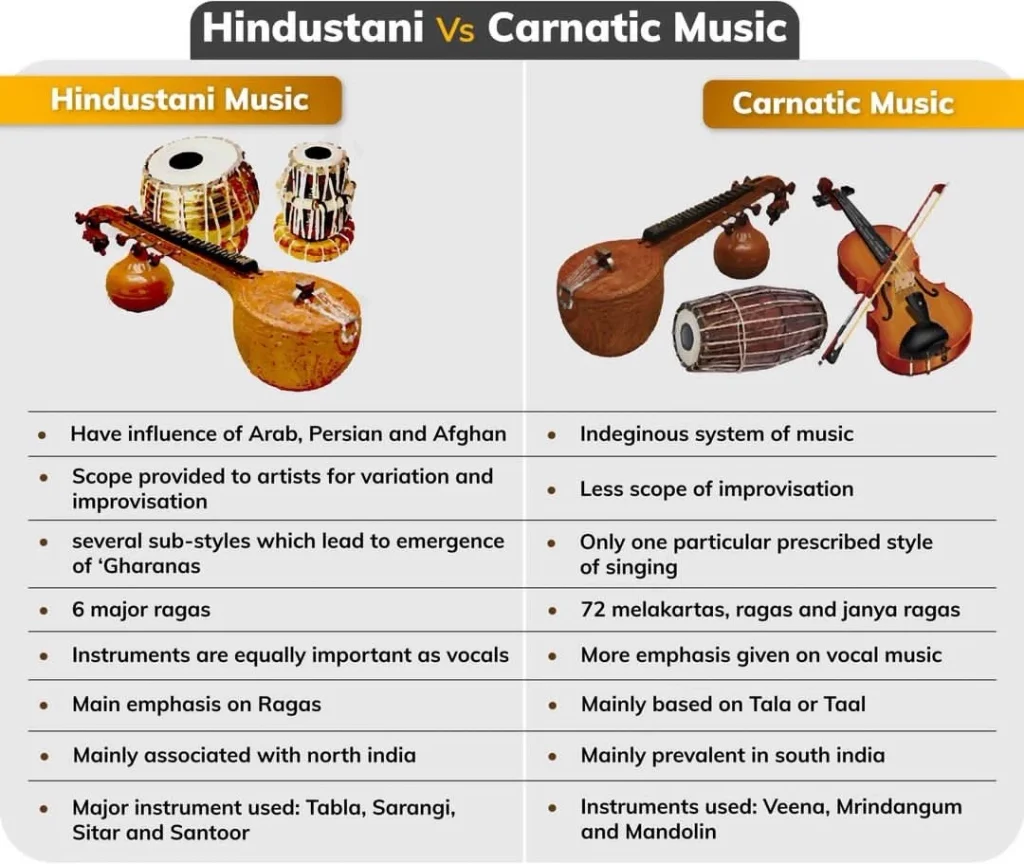
Both traditions draw on ancient Indian ideas about music, including texts on music and drama that go back many centuries. Over time, especially from roughly the 13th century onward, the two paths diverged. Hindustani music developed in the courts and cultural centres of the north, absorbing Persian and Central Asian influences under the Delhi Sultanate and the Mughals. Carnatic music developed in the south, closely linked to temple culture and devotional composition.
Raga: similar idea, different feel
Both traditions are built on ragas, melodic frameworks with characteristic notes and phrases. But the way ragas are approached differs.
- In Hindustani music, ragas are often associated with particular times of day or seasons, and the slow, gradual unfolding of a raga is central. Performers may spend a long time on the opening improvisation.
- In Carnatic music, ragas are organised within a systematic framework of 72 parent scales (melakarta ragas), from which many other ragas are derived. Ornamentation (gamaka) is especially intense and central to the identity of each raga.
Some ragas exist in both traditions with similar notes but different names, such as Yaman in Hindustani and Kalyani in Carnatic, though they are not always identical in how they are performed.
Composition versus improvisation
Both traditions combine composed and improvised music, but in different proportions.
- Carnatic concerts are built around a large repertoire of fixed compositions, especially kritis by composers such as Tyagaraja, Muthuswami Dikshitar and Syama Sastri. Improvisation, such as alapana, neraval and kalpanaswaram, is woven around these compositions.
- Hindustani performances often use a short composition (a bandish in vocal music, or a gat in instrumental music) as a base for extended improvisation. The emphasis is more on improvisation than on the composition itself.
Structure of a performance
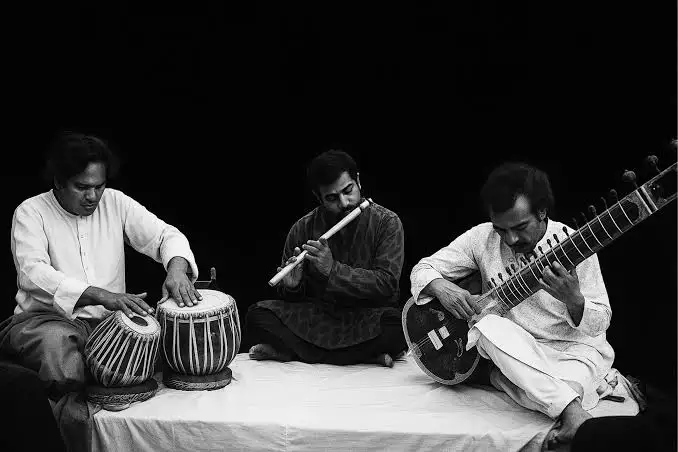
A Hindustani performance often begins with an alap, a slow, unmetered exploration of the raga, which can be long. Rhythm enters gradually, and the tempo builds over the course of the piece, often ending at great speed. In vocal music, major forms include dhrupad, an older, austere style, and khayal, the most common form today, along with lighter forms such as thumri.
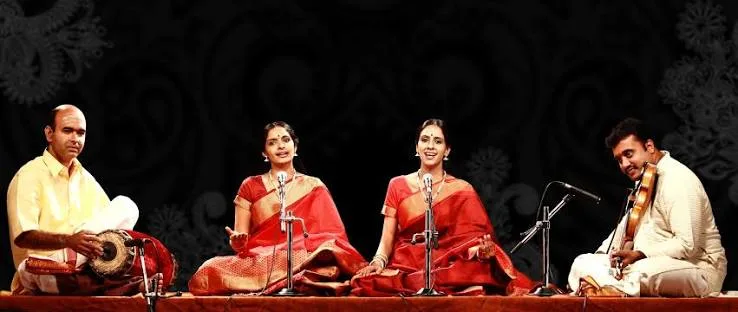
A Carnatic concert typically includes many pieces of varying length within a single programme. It may begin with a varnam and build towards a main piece with extended improvisation and a percussion solo (tani avartanam), before ending with lighter compositions.
Instruments
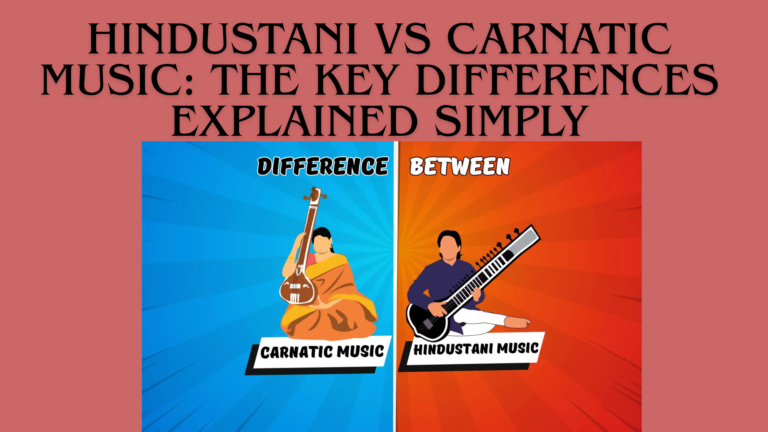
Hindustani: sitar, sarod, bansuri, shehnai, santoor, sarangi and harmonium, with the tabla as the main percussion instrument and the tanpura providing the drone.
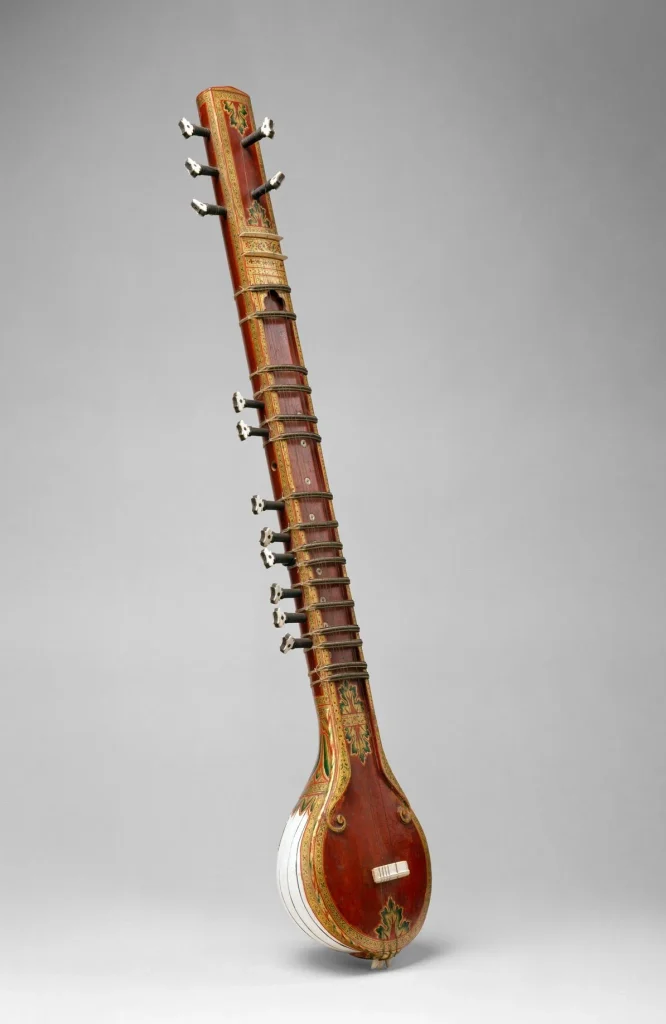
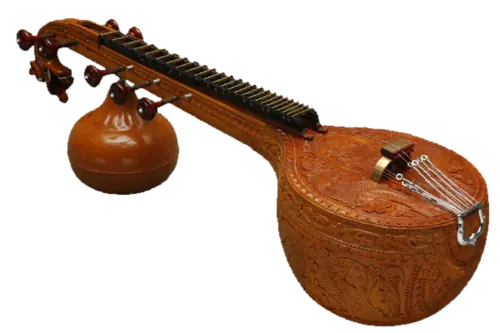
Carnatic: veena, violin (adapted to Indian technique), flute (venu), nadaswaram and gottuvadyam, with the mridangam as the main percussion instrument, often joined by the ghatam, kanjira and morsing.
The violin is a striking example of adaptation: it is a central accompanying instrument in Carnatic music, played seated with the scroll resting on the player’s foot.
Vocal music and the role of language
Carnatic music is strongly vocal-centred. Even instrumentalists are expected to “sing” through their instruments, following the lyrics of compositions. Lyrics are mainly in Telugu, Sanskrit, Tamil and Kannada.
Hindustani music has a vibrant vocal tradition too, but instrumental music holds a very prominent place, and lyrics, in languages such as Braj Bhasha, Hindi and Urdu, are often secondary to melodic exploration.
Gharanas and lineages
Hindustani music is organised into gharanas, stylistic schools that pass down distinctive approaches to voice, ornamentation and repertoire, such as the Gwalior, Kirana, Jaipur-Atrauli and Agra gharanas in vocal music. Carnatic music also has strong teacher-student lineages, but stylistic schools are less formally defined in this way.
Which should you start with?
There is no wrong choice. If you enjoy slow, meditative, gradually unfolding music, start with a Hindustani alap or a dhrupad recording. If you enjoy rich melodies, devotional lyrics and rhythmic intricacy within compact pieces, start with a Carnatic concert recording. Better still, listen to both, and notice how two traditions with shared roots have grown into such distinctive musical worlds.
The bottom line
Hindustani and Carnatic music share the ideas of raga and tala, but differ in history, instruments, structure and emphasis. Learning to hear these differences deepens your appreciation of each, and of the remarkable range of Indian classical music.


1 thought on “Hindustani vs Carnatic Music: The Key Differences Explained Simply”